
Thanks for reading the first article in our “Ask the Forestry Expert” series. If you have a burning forestry question (pun not intended) and you’d like the subtle nuance and deep expertise of a professional forester rather than an AI assistant, reach out to us.
If you own woodland in the Northeast (especially Pennsylvania, New York, or surrounding states) you may have noticed something concerning:
“I’ve got plenty of mature trees, but where are the young ones?”
It’s a common question we hear from landowners managing northeastern hardwood forests. The answer usually comes down to one key issue: Conditions on the forest floor.
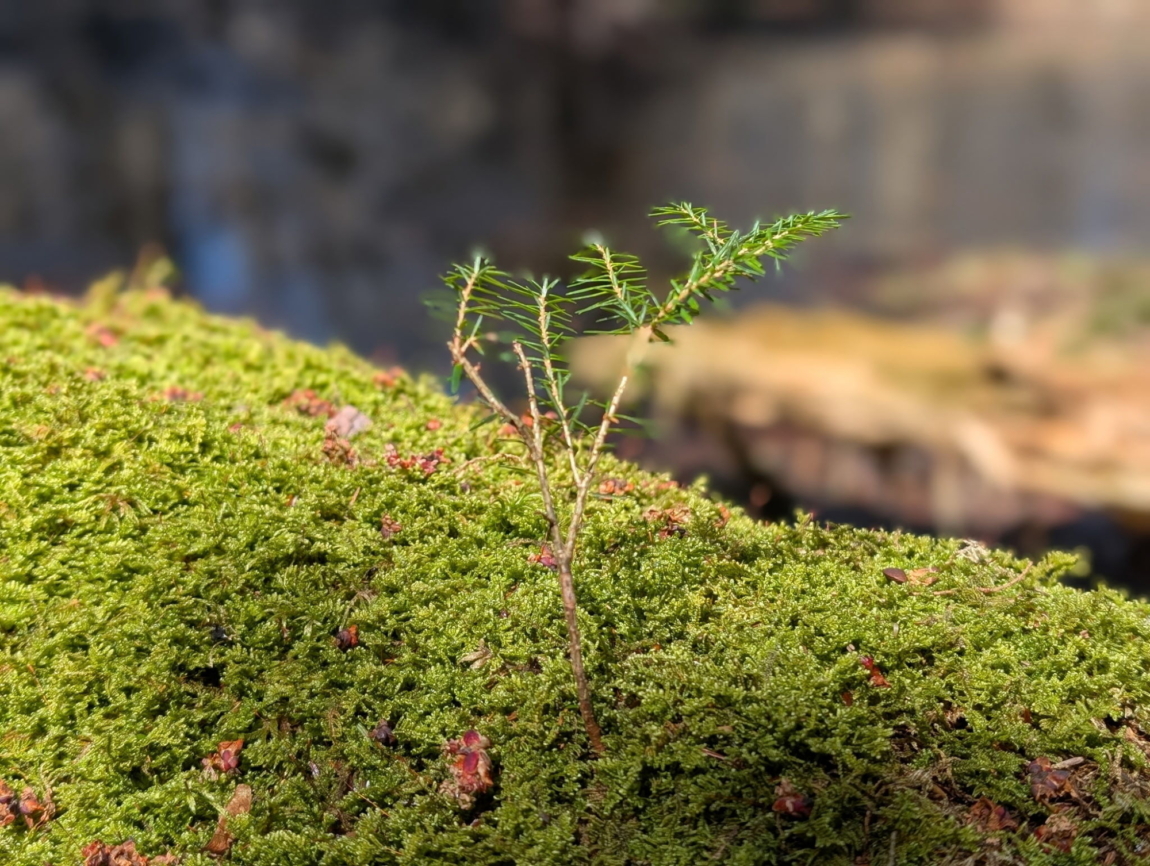
“I have big, healthy trees. Shouldn’t new ones naturally spring up?”
Not in today’s forests and not without the right conditions.
In Northeastern hardwood forests (oak, maple, cherry, etc.), mature trees produce seeds, but seedlings need the right conditions to survive:
- Sunlight
- Space
- Limited competition
Many forests simply don’t provide these conditions.
“What’s different about Northeastern hardwood forests?”
Forests in our region are great at growing shade, but not always great at regenerating the species we want.
In this region, we commonly see:
- Dense hay-scented fern and New York fern layers
- Aggressive American beech sprouting
- Heavy shade from closed canopies
These conditions favor shade-tolerant trees like maple and beech but make it very difficult for species like:
- Oak
- Black cherry
- Other valuable or wildlife-friendly species
“So what’s stopping the new trees?”
A combination of shade and competition discourages growth. Even when seeds are present, seedlings often:
- Lack sufficient light to grow
- Get overtaken by ferns or beech
- Are browsed heavily by deer before they can establish
From above, the forest looks full and green. But on the ground, it’s often a bottleneck for regeneration.
“Can I just leave my forest alone?”
If left unmanaged, many Northeastern hardwood forests tend to shift toward:
- More beech and maple
- Less oak and cherry
- Lower wildlife value for some species
- Reduced long-term timber quality
If your goals include oak regeneration, wildlife habitat, or future timber value, doing nothing usually won’t get you there.
“What does good management look like here?”
It’s about strategically resetting the conditions.
Common tools in Northeastern hardwood management include:
- Intermediate thinnings
Improving growth and vigor in younger stands - Controlling interfering vegetation
Managing ferns and beech so seedlings can compete - Regeneration harvests
Opening the canopy to allow sunlight to reach the forest floor
In many cases, landowners choose to reinvest part of a timber sale into these treatments. Without them, regeneration may fail.
“Is harvesting trees really the right move?”
When done properly, it’s essential.
In this region, harvesting is often the trigger that allows the next forest to begin.
A well-planned harvest can:
- Increase sunlight dramatically
- Stimulate seed germination
- Improve habitat diversity
- Set the stage for the next 70 - 80 years of forest growth
It also benefits wildlife. Species like grouse, deer, and woodcock rely on the young forest conditions created after disturbance (one reason groups like the Ruffed Grouse Society advocate for active management.
“How long does it take to see results?”
You’ll start seeing change faster than you think.
- 1 - 3 years: Seedlings begin to establish (if conditions are right)
- 5 - 10 years: Young regeneration becomes visible across the site
- 20+ years: A new stand begins to take shape
Forestry is long-term—but regeneration success (or failure) shows up early.
“How do I know what my woods need?”
There’s no one-size-fits-all answer.
Northeastern hardwood forests are incredibly variable. Soil, past land use, deer pressure, and species mix all play a role.
We often tell landowners:
“You can walk a short distance and need a completely different approach.”
The Bottom Line
In Northeastern hardwood forests, regeneration is a deliberate strategy. If your woods aren’t growing back the way you expect, it’s usually a sunlight and competition problem rather than a seedling problem.
The good news? With thoughtful and active management such as thinning, vegetation control, and well-planned harvests, you can correct these conditions and set your forest up for healthy, long-term growth.
Have questions about your woods?
FORECON works with landowners in New York, Pennsylvania, and West Virginia to evaluate forest conditions and build practical, long-term plans. Read more about our forest management services or strategy services. FORECON offers a one-stop shop to all of your management needs including: management planning, timber sales, appraisals and herbicide and competition control.
Connect with FORECON Inc. to learn more or give us a call at (716) 664-5602.