The deed may be new, but the woods come with a history. Timber has grown, roads have aged, boundary markings have faded, and family members have different ideas about what should happen next. As a new owner, your first challenge is to understand what you’ve inherited.
Fortunately, most woodland decisions don’t need to be made immediately. Your first priority? Understand what you own. This checklist provides a step-by-step guide to gain a better understanding.
Start With the Property, Not the Timber
Four years ago, a prospective client (now a current client) reached out to us about a property he and two siblings had inherited. The multi-generational property was located in a remote area of Pennsylvania.
None of the siblings knew when the timber had been last harvested, where the boundary lines were located, or whether the old logging roads were still usable.
The first step for these siblings, as well as anyone who has recently inherited woodland, should not be to call a logger. It should be gathering records and walking the property.
Start with the deed, survey, tax map, and any documents related to easements, rights-of-way, leases, or previous forestry work. Then locate the property’s access points and boundaries on the ground. Look for survey pins, old fencing, or boundary paint, but do not assume those markers are accurate if questions remain.
Be Cautious About Early Timber Offers
A change in ownership can attract interest from potential buyers. An offer may be legitimate, but a new owner usually has too little information to judge whether it’s fair or whether harvesting is appropriate.
Timber value depends on more than acreage or the number of large trees. Species, diameter, quality, volume, terrain, access, and current markets all affect what a buyer may be willing to pay. To learn more about timber markets and sales, read this article on getting ready for a timber sale or this article on good bidding practices.
The type of harvest matters too. Removing only the largest and most valuable trees can provide immediate income while reducing the quality and future potential of the forest.
Before accepting an offer, walk the property with a professional forester. A forester who represents your interests can evaluate the timber, explain your options, and help determine whether a harvest supports your long-term goals.
See the Woods Through a Forester’s Eyes
A hillside of mature hardwoods may be approaching a useful management window. A dense young stand may need thinning. An overgrown opening may provide valuable wildlife habitat. A wet section of road may be the beginning of a costly erosion problem.
During an initial property visit, a forester can help answer several important questions:
- What tree species and forest types are present?
- What is the general condition of the woods?
- Is there merchantable timber?
- Are any areas ready for management?
- Are invasive species, insects or diseases creating problems?
- Do roads or stream crossings need attention?
- What can wait, and what should be addressed now?
You may eventually benefit from a detailed timber inventory or forest management plan. But an initial consultation can provide useful direction before you commit to a larger project.
Decide What You Want from the Property
Remember the siblings who had inherited the family property in Pennsylvania? They had three goals: Preserve the property for future generations, generate periodic income, and create a maintenance-free property.
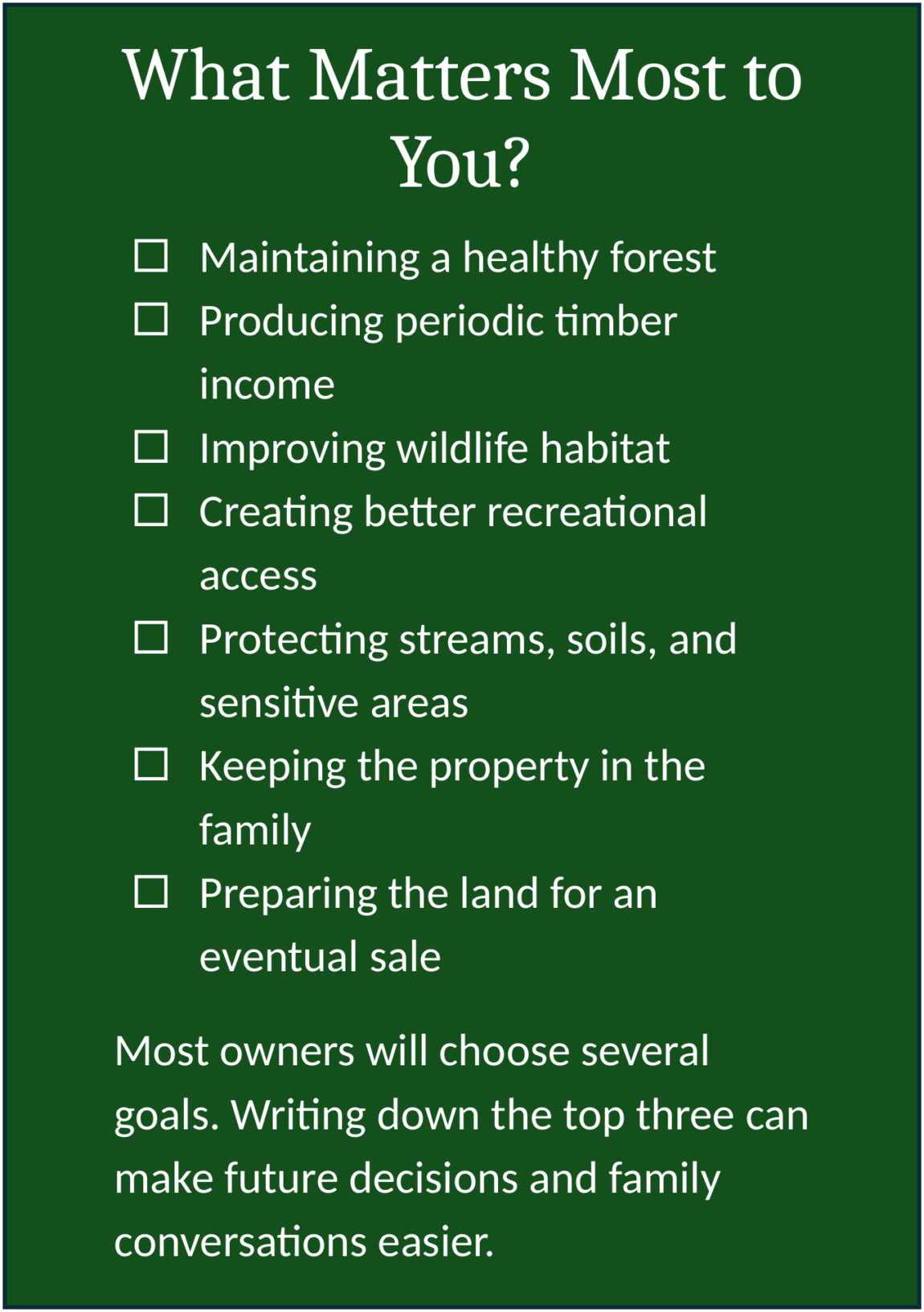
Those goals are not necessarily in conflict. A carefully planned harvest may generate income, improve growing conditions for the remaining trees, and create younger habitat. Road improvements made during forestry work may also improve recreational access.
The important step is to agree on the priorities before deciding what work should be done.
Next Step: Treat Timber as an Asset
After the goals of the property become clearer, the owners can identify the appropriate next steps. A timber inventory can estimate the species, size, quality, and volume of merchantable trees. It can also establish a baseline for tracking how the forest changes over time.
This information may help you evaluate future timber-sale opportunities, plan improvements, document property value, or make estate-planning decisions. It can also prevent unrealistic expectations. A woods full of large trees is not necessarily a woods full of high-value timber.
Understand the Financial Details
Many states offer reduced property-tax assessments for qualifying woodland. If the property is already enrolled in a forestry or land-use program, find out whether the transfer of ownership creates new requirements. Withdrawing land or changing its use can sometimes trigger penalties or additional taxes.
Inherited land and timber may also receive an adjusted tax basis based on their value at the previous owner’s death. Properly documenting the portion of that value associated with the timber may affect how taxable income is calculated if timber is sold later.
Because the rules depend on the property and the circumstances of the inheritance, consult an accountant, attorney, or forester familiar with timber taxation. It’s much easier to assemble the necessary information now than to reconstruct it years later.
Address Immediate Risks
Woodland management usually rewards patience, but some problems become more expensive when ignored.
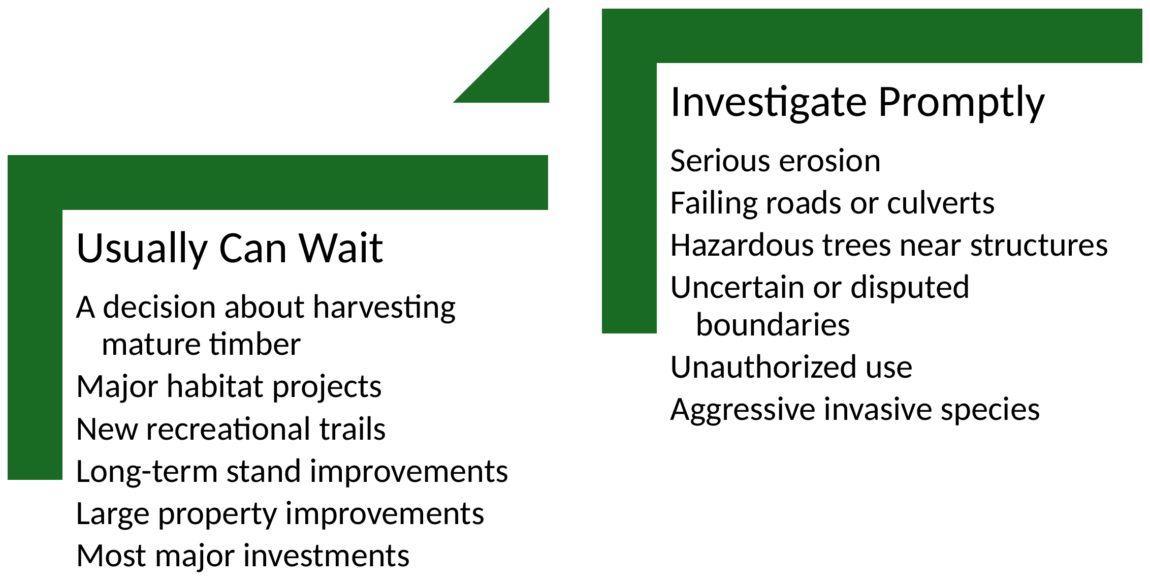
Insurance should also be reviewed early, particularly if relatives, hunters, or other visitors use the land. Roads, ponds, bridges, old structures, and recreational activities may create liability concerns. If hunting rights are leased or logging is planned, discuss the appropriate coverage with an insurance professional familiar with rural property.
Manage With a Longer View
New owners sometimes feel pressure to begin improving the property immediately. In woodland management, learning the land is productive work. Walk it in different seasons and then decide what comes next. Our checklist can help you get started.
A well-managed woodland can provide timber income, recreation, wildlife habitat, and long-term family value. The best first step is gaining enough knowledge to understand how the property might provide several of them.
Not sure where to begin? A FORECON forester can help you understand your woodland, identify immediate priorities and develop a plan that reflects your goals. Contact us to schedule an initial property consultation or call (716) 664-5602. Our firm has been helping landowners make informed forest management decisions since 1954.

Growing a Healthier Forest for Those Who Served: LEEK Hunting and Mountain Preserve in Potter County, Pennsylvania